- 0 views
- By Caroline McNally
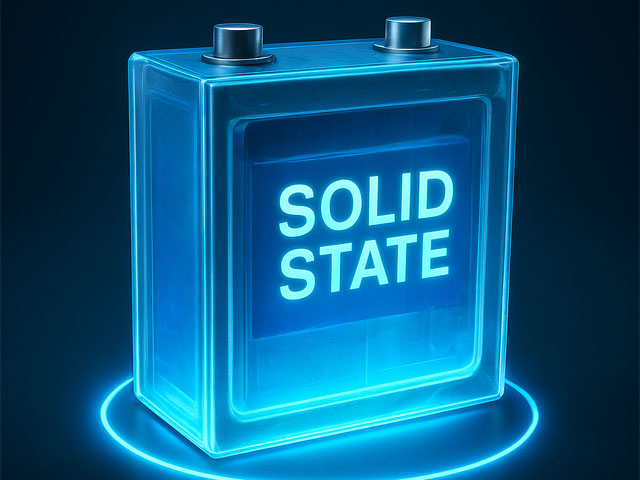
In the high-stakes world of electric vehicles, batteries are the beating heart. And over the past few months, Toyota has quietly intensified its push toward a breakthrough that could reshape the EV landscape: all-solid-state batteries (ASSBs).
Toyota already has a strong reputation in hybrid and fuel-cell technologies, but it’s been playing catch-up in the battery EV arena. Now, through strategic partnerships and internal R&D, the company is attempting to leapfrog existing lithium-ion tech with a battery that’s safer, denser, and faster to charge.
What Makes Solid-State Batteries So Appealing?
To appreciate Toyota’s ambitions, it helps to understand the allure of solid-state over conventional lithium-ion batteries:
- Safer chemistry
Traditional lithium-ion batteries use liquid or gel electrolytes, which carry a risk of leakage, dendrite formation, and thermal runaway under stress. A solid electrolyte dramatically reduces those risks. - Higher energy density → longer range
Solid-state designs can pack more active material per volume, allowing ranges well beyond today’s norms. Early projections suggest Toyota’s future EVs could reach over 600 miles on a single charge. - Faster charging
One of the most exciting advantages of solid-state batteries is how quickly they can recharge. Toyota’s upcoming designs are expected to charge from 10–80% in under 10 minutes—making recharging feel more like a traditional gas fill-up. - Longer lifespan and durability
Solid-state structures tend to resist degradation better than conventional cells, improving the overall lifespan of the battery and reducing the need for replacement.
In short: more range, faster charging, improved safety—if Toyota can make the technology reliable and affordable at scale.
Partnerships: Toyota + Sumitomo + Idemitsu
Toyota isn’t going it alone. Two material companies have become critical partners in its solid-state mission.
Sumitomo Metal Mining has been collaborating with Toyota to develop advanced cathode materials that can withstand the stresses of repeated charging cycles. Their joint effort focuses on building more durable and stable cathodes—key to unlocking longer-lasting batteries. Mass production of these new materials is expected by 2028.
Meanwhile, Idemitsu Kosan is taking charge of producing lithium sulfide, a vital component in Toyota’s solid-state battery electrolyte. Together, the companies are working toward large-scale commercialization of this technology within the 2027–2028 window.
These partnerships highlight Toyota’s recognition that no single company can solve the solid-state challenge alone. It requires a unified approach across materials science, manufacturing, and automotive engineering.
The Roadmap: From Lab to Road
Toyota’s rollout strategy is cautious but deliberate:
- 2026: Begin gradual production of next-generation lithium-ion and “performance” batteries, alongside early solid-state prototypes.
- 2027–2028: Launch the first EVs featuring solid-state batteries under controlled, limited production.
- 2030 and beyond: Expand toward mass adoption once cost, scale, and reliability goals are met.
The Japanese government has already backed Toyota’s plans, approving new facilities and funding for domestic battery manufacturing. Early solid-state output will likely go toward premium models, giving Toyota a proving ground for refinement before wider rollout.
At the same time, Toyota is expanding its EV lineup overall. By 2027, the company aims to offer roughly 15 fully electric models and produce around 1 million EVs annually.
Challenges and Uncertainties Ahead
As promising as solid-state batteries are, the journey remains fraught with challenges:
- Materials and supply limitations — Specialized materials like lithium sulfide and next-generation cathodes are still costly and complex to scale.
- Manufacturing difficulty — Solid-state batteries require extremely precise production. Even microscopic imperfections can cause failure.
- Competition with advanced lithium-ion — Conventional batteries are improving quickly, meaning solid-state must prove it can outperform at a competitive price.
- Real-world reliability — Lab success doesn’t always translate to field performance. Heat, vibration, and aging all test the resilience of these new cells.
- Timing and competition — Toyota faces strong competition from startups and global battery makers also racing toward commercialization.
Why Toyota’s Approach Matters
What makes Toyota’s approach unique is its patience and partnerships. Instead of rushing to be first, Toyota is building an ecosystem—one that integrates automaking, material science, and government support. It’s a play for long-term leadership rather than short-term headlines.
If Toyota succeeds, the ripple effects would be massive:
- New benchmarks for EV performance — A vehicle with 600+ miles of range and 10-minute charge times would redefine consumer expectations overnight.
- Reclaiming leadership — After years of being seen as slow to adopt full EVs, Toyota could suddenly find itself ahead of the pack.
- Reviving Japan’s battery industry — A domestic supply chain would strengthen Japan’s position in the global electrification race.
- Beyond vehicles — Solid-state technology could expand into aviation, energy storage, and other sectors where high-density, safe batteries are crucial.
Final Thoughts: A Game of Patience Meets Innovation
Toyota’s solid-state journey is not about hype—it’s about execution. With its strategic partnerships, material innovations, and steady pacing, the company is setting the stage for a major shift in EV technology.
The next few years will determine whether solid-state batteries can move from laboratory breakthrough to everyday reality. If Toyota pulls it off, the future of electric mobility could change forever.
Get Help from Maverick Electric Vehicle Services
Choosing the right charging station provider is key. Maverick Electric Vehicle Services can guide you through the installation process, ensuring you select the right equipment and setup to maximize efficiency and ROI.
Ready to make your EV installation project a reality? Contact us today and let Maverick’s dedicated EV team lead the way!


Related articles and news
 EV Infrastructure
 Pennsylvania Launches $100 Million NEVI Investment to Expand Community EV Charging
Electric vehicles are becoming more common on American roads, but widespread adoption depends on one critical factor: access to reliable and convenien …
Read more Electric cars
 Cold Current: How Electric Vehicles Handle the Freeze
Winter has always tested vehicles, but for electric vehicles (EVs), cold weather introduces a unique set of challenges. In colder climates across the …
Read more